Most gyms get more enquiries than new members. The difference is rarely the gym. It is follow-up: the person who asked about fees and was never called back, or the visitor who said "I'll think about it" and was forgotten.
Write down every enquiry
For each enquiry, record the name, phone number, where they came from and what they asked about. "Walk-in", "referred by a member" and "social media" are useful sources, because over time they show you where new members actually come from.
Always set a follow-up date
An enquiry without a follow-up date is an enquiry that will be forgotten. When someone says they want to think about it, ask when you can check back and write that date down.
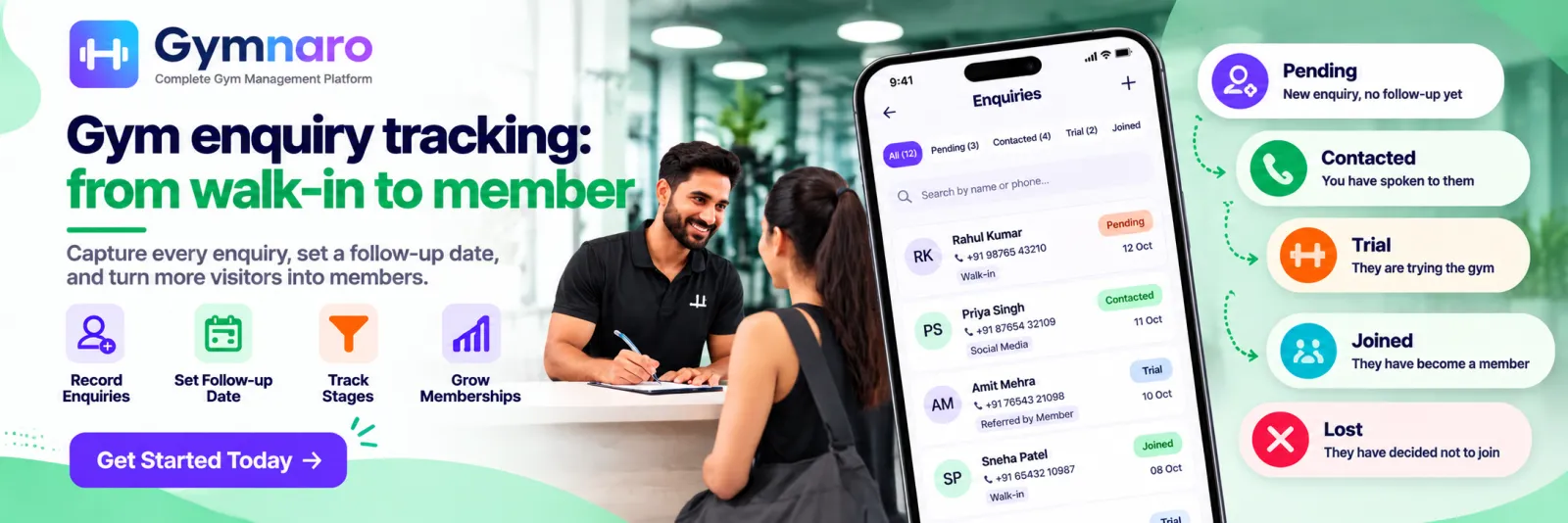
Use simple stages
- Pending: a new enquiry nobody has followed up yet.
- Contacted: you have spoken to them.
- Trial: they are trying the gym.
- Joined: they have become a member.
- Lost: they have decided not to join.
Five stages are enough to see where enquiries get stuck. Moving the record forward each time something happens keeps the list honest.
Follow up while interest is fresh
A call the same or the next day is far easier than one a week later. Mention what they asked about so it feels like a conversation, not a sales call, and offer a trial or a visit.
Do not retype when they join
When someone joins, you already have their name and phone number. Turn the enquiry into a member instead of entering everything again. It saves time and avoids mistakes.
What to ask on the first contact
- What are they hoping to achieve?
- When did they last exercise regularly?
- Which time of day suits them?
- Have they trained at a gym before?
Write the answers in the enquiry. The next conversation goes much better when you can refer to what they told you.
Two short scripts
First call: “Hi, this is [name] from [gym]. You asked about membership. What are you hoping to get out of training? I can show you around this week if that helps.”
After a visit or trial: “Thanks for coming in. How did the session feel? If it suits you, I can set you up with the package we discussed. Would you like to start this week?”
Learn where members come from
Because you record the source of every enquiry, you can see over time which ones turn into members: walk-ins, referrals, social media or nearby posters. That tells you where your effort is paying off, and where it is not.
Handling price questions
Do not lead with the price. Understand what the person wants first, then explain which package fits and what it includes. If the price is a real concern, show a shorter package and what it costs per month. Never invent a discount on the spot; if you have a standing offer, present it clearly and record it with the payment when they join.
Common mistakes
- Keeping enquiries on a phone only. If the person who took the call is away, nobody knows who asked.
- No follow-up date. Good intentions do not survive a busy week.
- Never marking lost. A list full of old open enquiries hides the ones that matter.
- Treating every enquiry the same. Someone who has visited and asked about a package is warmer than a phone enquiry.
A simple daily routine
- Open the list of enquiries with a follow-up date of today or earlier.
- Contact each one and note what they said.
- Set the next follow-up date or move the enquiry to trial, joined or lost.
- Convert anyone who has joined into a member.
Questions owners ask
How many times should I follow up?
Two or three polite follow-ups are reasonable. After that, mark the enquiry lost and move on, and keep the record in case they come back.
What should I offer a new enquiry?
A visit and a trial are usually the most effective next step, because they let the person see the gym for themselves.
How this works in Gymnaro
- Save each enquiry with a source and follow-up date.
- Move it from pending to contacted, trial, joined or lost.
- Convert an enquiry into a member in one step.
See the enquiries and leads page. When a new member joins, set up their membership package straight away.
← All posts · Guides · Pricing